

Dubai is home to some of the biggest banks in the Middle East, and banking jobs here are known for good pay, quick promotions, and a great work environment. But since so many people want these jobs, you need the right plan to get noticed.
This guide explains exactly how to get a bank job in Dubai — what qualifications you need, which banks are hiring, how to write a CV that gets shortlisted, and where to apply.
Why Banking Jobs in Dubai Are in Demand
Dubai’s banks are growing fast and hiring regularly for roles in retail banking, credit, sales, relationship management, and customer service. Big names like Emirates NBD, ADCB, Mashreq, and Standard Chartered post new openings often, and many of these roles are open to people from other countries too.
Because Dubai is such a popular place to work, competition is high. That’s why having a clear step-by-step approach makes a big difference.
Step 1: Know What Qualifications You Need
You don’t always need a finance degree to get a bank job in Dubai, but the right background helps a lot.
- A bachelor’s degree in finance, business, commerce, or accounting is enough for most entry-level and mid-level roles.
- Certifications like ACCA, CFA, or FRM help a lot for credit, risk, or investment roles. An MBA in finance also boosts your profile for senior roles.
- Basic knowledge of banking rules and compliance (AML/KYC) is useful, especially for operations, risk, and compliance jobs.
- Arabic language skills are not always required, but they help — especially for customer-facing and relationship manager roles at local UAE banks.
If you’re a fresher with no banking background, don’t worry. Many banks in Dubai hire freshers for roles like Customer Service Representative or Universal Banker, where good communication and sales skills matter more than experience.
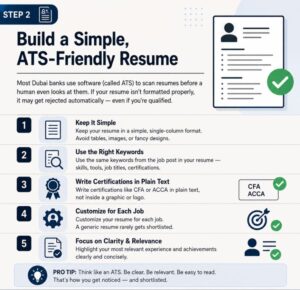
Step 2: Build a Simple, ATS-Friendly Resume
Most Dubai banks use software (called ATS) to scan resumes before a human even looks at them. If your resume isn’t formatted properly, it may get rejected automatically — even if you’re qualified.
Here’s how to fix that:
- Keep your resume in a simple, single-column format. Avoid tables, images, or fancy designs.
- Use the same keywords from the job post in your resume — skills, tools, job titles, certifications.
- Write certifications like CFA or ACCA in plain text, not inside a graphic or logo.
- Customize your resume for each job. A generic resume rarely gets shortlisted.
Step 3: Target the Right Banks
Some of the top banks actively hiring in Dubai include:
- Emirates NBD — retail banking, customer service, and fresh graduate programs
- First Abu Dhabi Bank (FAB) — corporate banking, treasury, and wealth management roles
- Mashreq Bank — known for digital banking and technology-driven roles
- Abu Dhabi Commercial Bank (ADCB) — strong in credit and investment roles
- Dubai Islamic Bank (DIB) — Islamic banking, retail, and investment roles
- HSBC, Citibank, Standard Chartered — international banks with corporate and investment banking roles
Always apply through the bank’s official careers page first. It’s the safest way to apply and avoids fake job postings.
Step 4: Prepare for Interviews
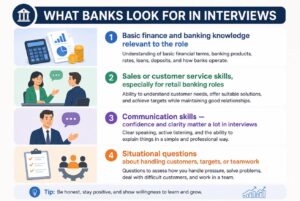
Once you get shortlisted, banks usually test for:
- Basic finance and banking knowledge relevant to the role
- Sales or customer service skills, especially for retail banking roles
- Communication skills — confidence and clarity matter a lot in interviews
- Situational questions about handling customers, targets, or teamwork
Research the bank before your interview — know their products, recent news, and what they specialize in (retail banking, Islamic banking, corporate banking, etc.).
Step 5: Tips to Stand Out From Other Applicants
- Apply consistently. Don’t just apply once and wait — apply to multiple roles and banks regularly.
- Use LinkedIn. Many banking jobs in Dubai are filled through referrals before they’re even posted publicly. Connect with recruiters and bank employees.
- Consider recruitment agencies. Several UAE-based agencies specialize in placing candidates in banking and finance roles.
- Be patient. Since many people apply for the same roles, it can take a few weeks or months. Keep applying and improving your resume along the way.
Get a Bank Job in Dubai
Getting a bank job in Dubai isn’t complicated once you break it down: get the right qualifications, build a resume that passes automated screening, apply directly to the right banks, and stay active on job portals. Focus on roles that match your experience level, keep applying consistently, and you’ll improve your chances significantly.